
Memory plays a central role in everyday life. It allows people to store information, recall experiences, learn new skills, and make decisions. Understanding how memory works can help individuals adopt habits that support mental clarity and cognitive performance.
Memory is not a single process but a system made up of several stages. First, information must be encoded, which means the brain receives and processes new data. Next, the information is stored for a period of time. Finally, retrieval allows the brain to access stored information when it is needed. Each of these stages depends on attention, repetition, and mental engagement.
Attention is the foundation of strong memory formation. When people are distracted, the brain has difficulty processing new information effectively. Focusing on one task at a time and minimizing interruptions can improve the ability to retain information. Techniques such as note-taking or summarizing key points can also help reinforce learning.
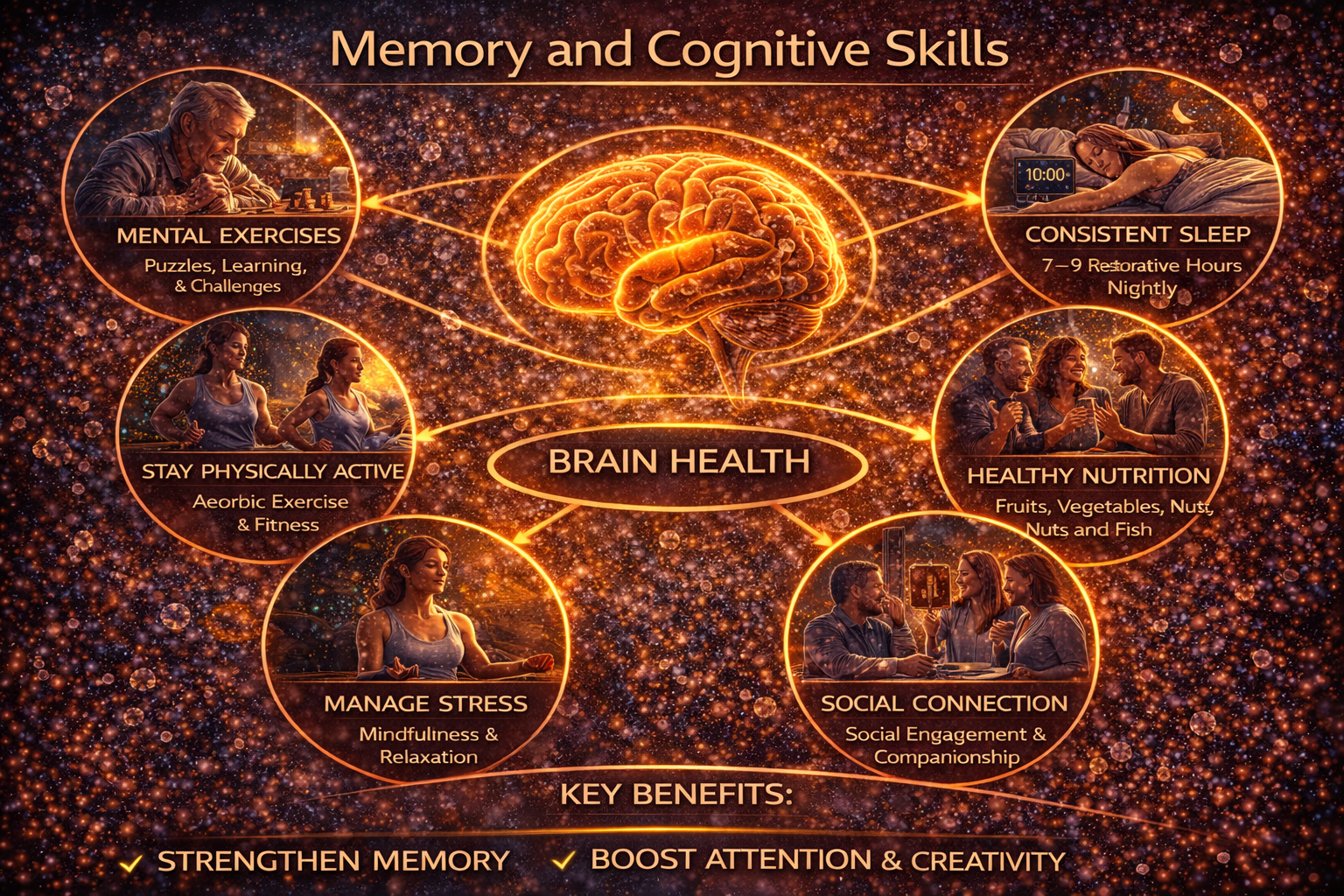
Mental exercises are another helpful way to support cognitive skills. Activities that challenge the brain encourage it to stay active and adaptable. Puzzles, strategy games, reading, language learning, and problem-solving tasks all stimulate different areas of the brain. Regular mental engagement encourages neural pathways to remain active.
Organization can also improve memory performance. Structuring information into categories or using lists helps the brain process and retrieve details more efficiently. For example, creating routines or associating new information with familiar concepts can make recall easier.
Learning new skills is particularly beneficial for cognitive health. Whether it involves studying a new language, practicing a musical instrument, or exploring a new hobby, the process of learning stimulates the brain. It encourages the formation of new neural connections, a phenomenon often referred to as neuroplasticity.
Social interaction also supports cognitive engagement. Conversations, shared experiences, and collaborative activities stimulate thinking and memory processes. Engaging with others in meaningful ways can help keep the mind active and curious.
Healthy lifestyle habits support memory as well. Adequate sleep, balanced nutrition, and physical activity all contribute to normal cognitive function. These factors help maintain energy levels and support the brain’s ability to process information.
Memory naturally changes over time, but maintaining mental activity and healthy routines can support cognitive skills throughout life. By combining learning, organization, and lifestyle habits, individuals can help keep their minds sharp and engaged.